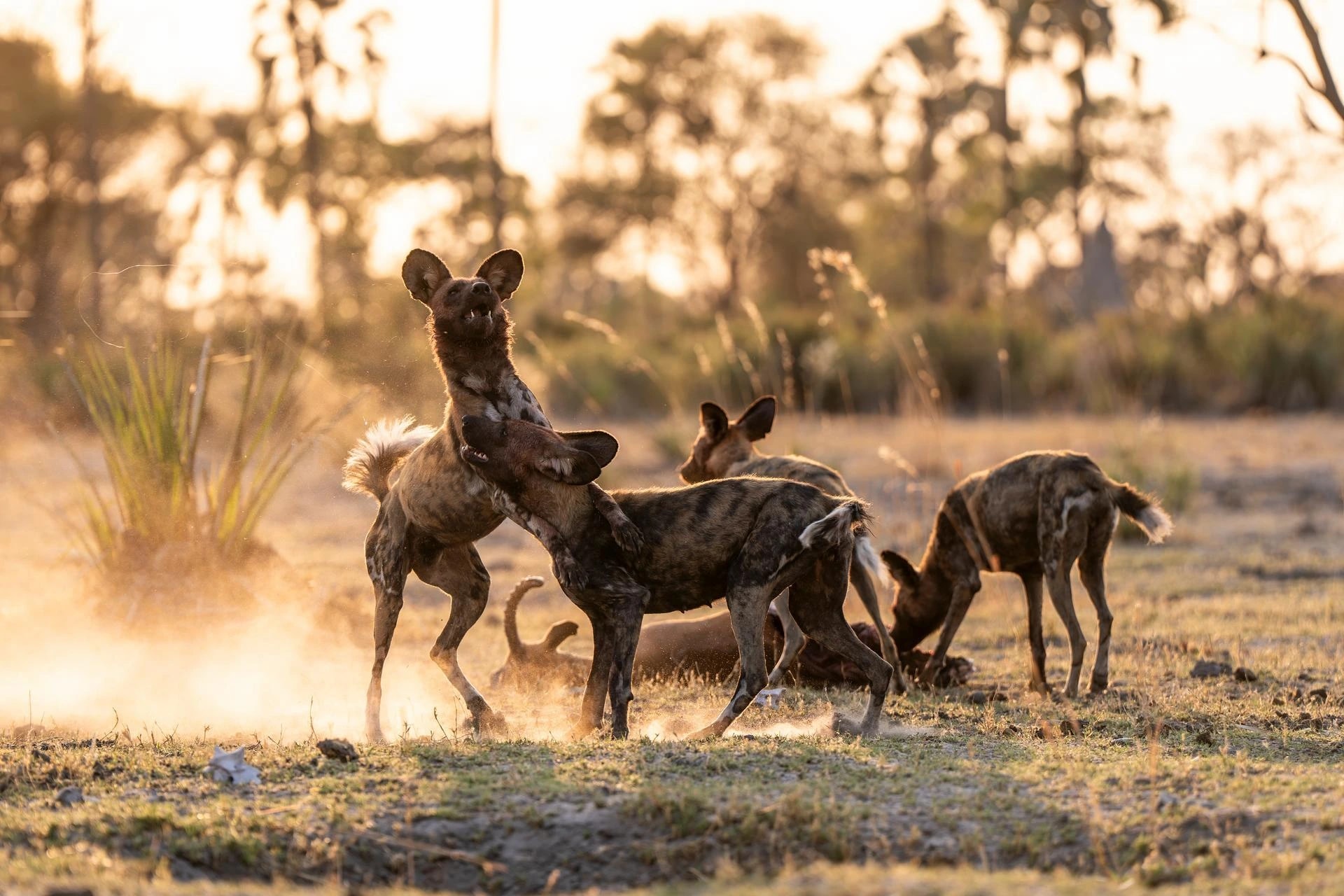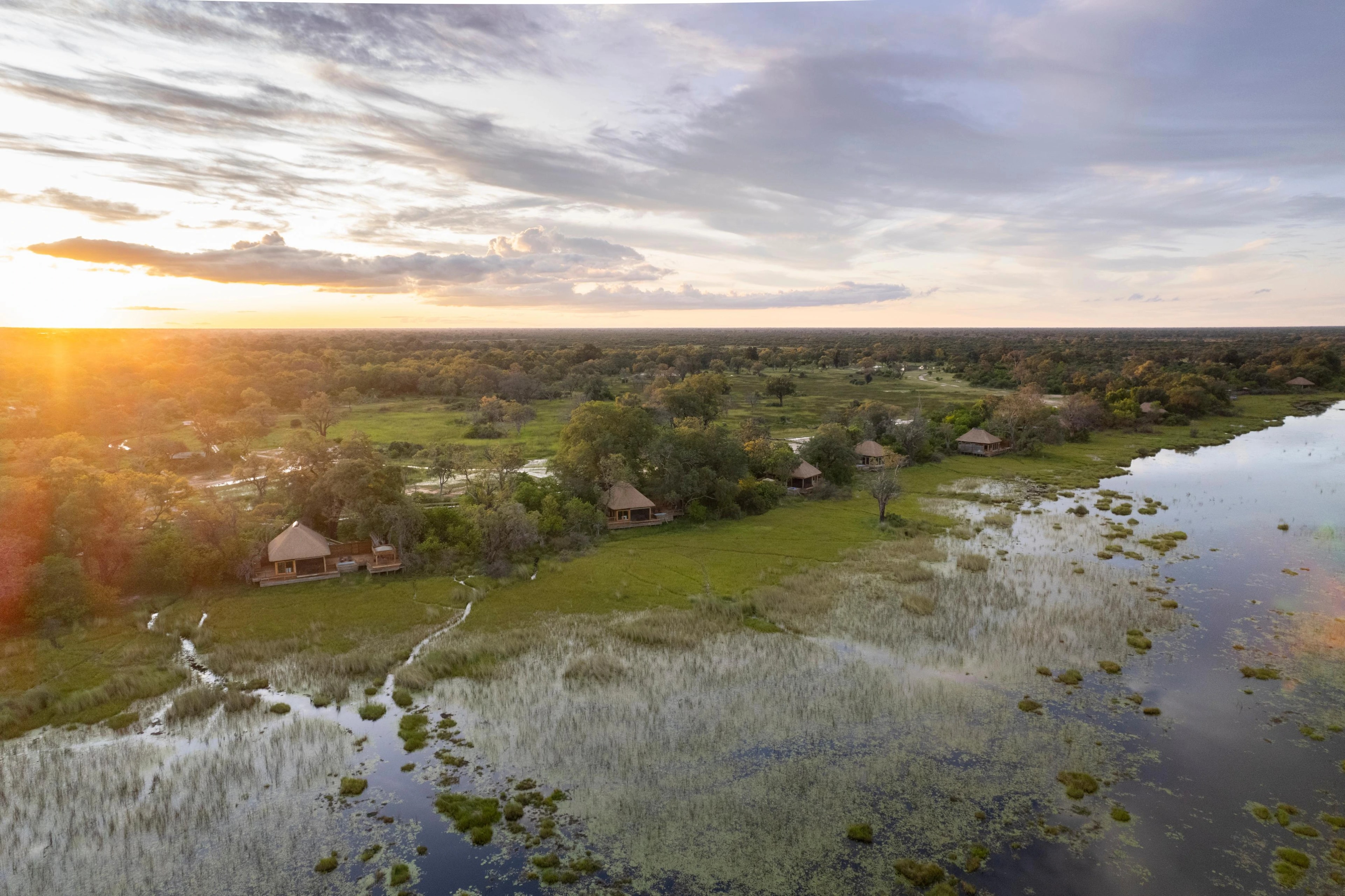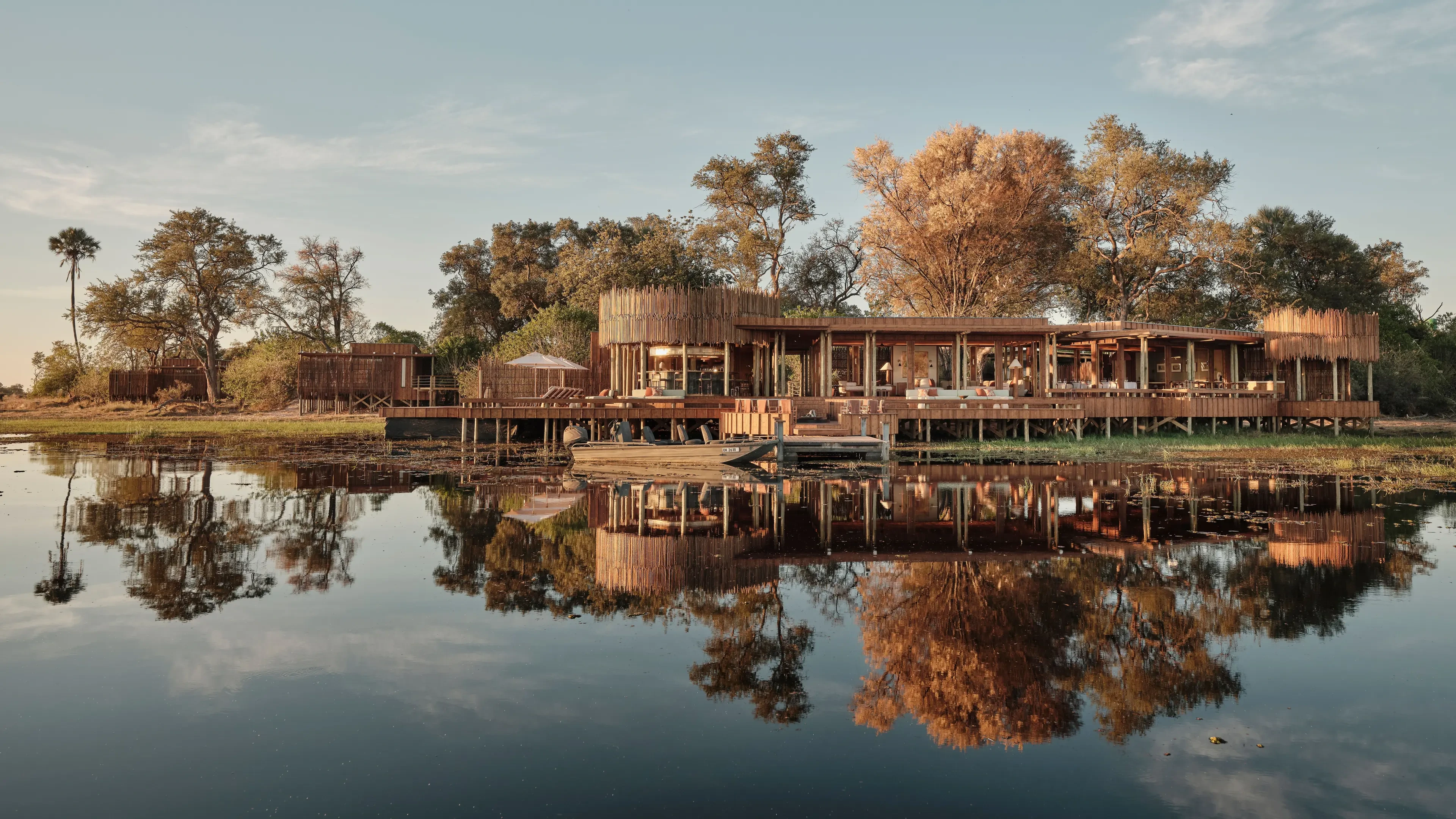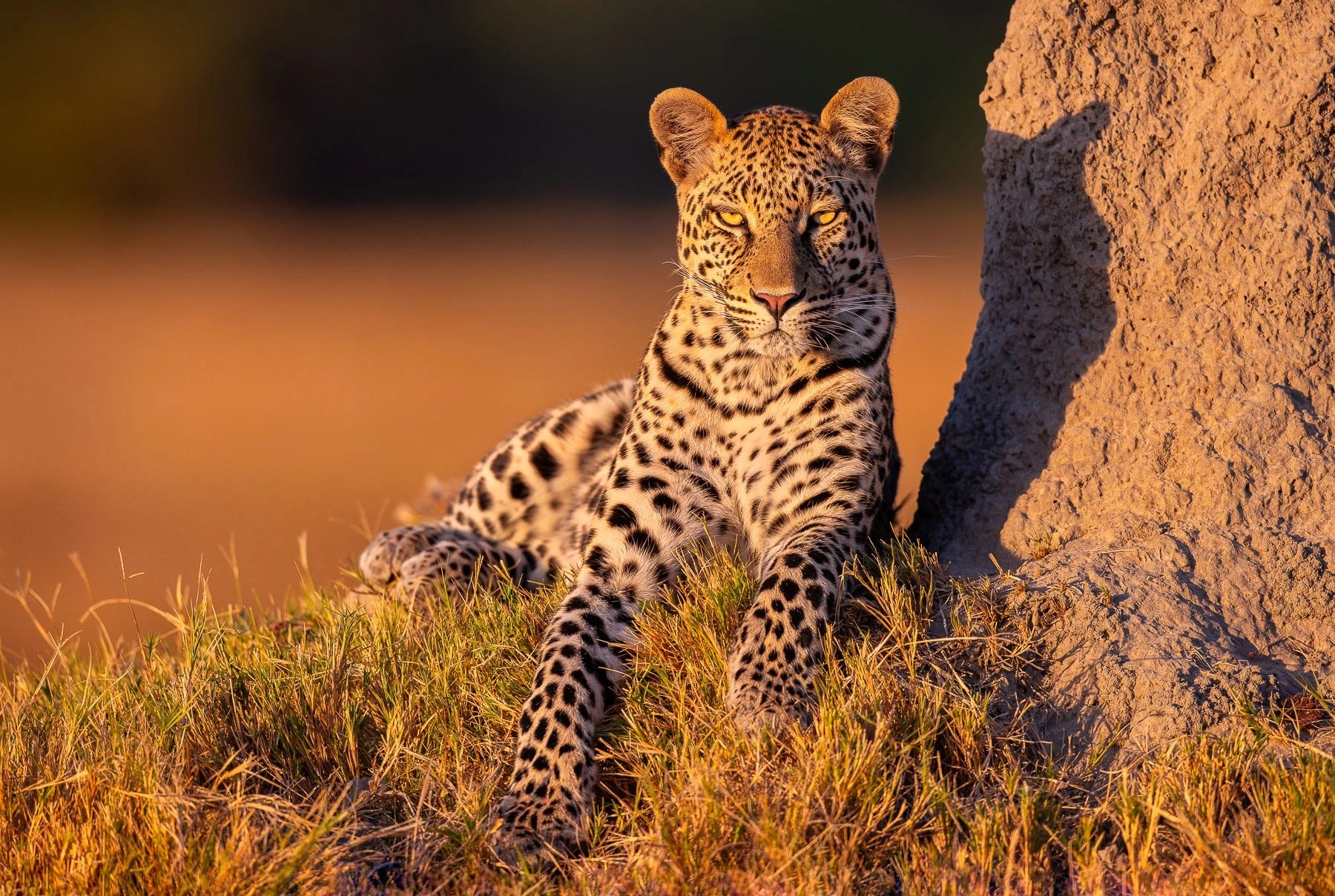
Okavango channels, Chobe's riverine elephants, the Kalahari's dry season — Botswana for purists.
Botswana is Africa's most tightly managed safari destination. Low volumes, high prices, no fences around most reserves. The Okavango Delta — a river that never reaches the sea — is the headline, a mosaic of palm islands and channels that fills up in the dry season.
Most of our Botswana itineraries fly between lodges. Drive times are long and roads limited. Camps are small — often 8 to 12 tents — and the guiding standard is the highest in Africa.
Explored by mokoro (dug-out canoe) and 4x4. Water levels peak between June and September.
The highest elephant density in Africa along the Chobe River. Boat cruises are obligatory.
The dry heart of the Delta — excellent predator viewing and broad mixed habitat.
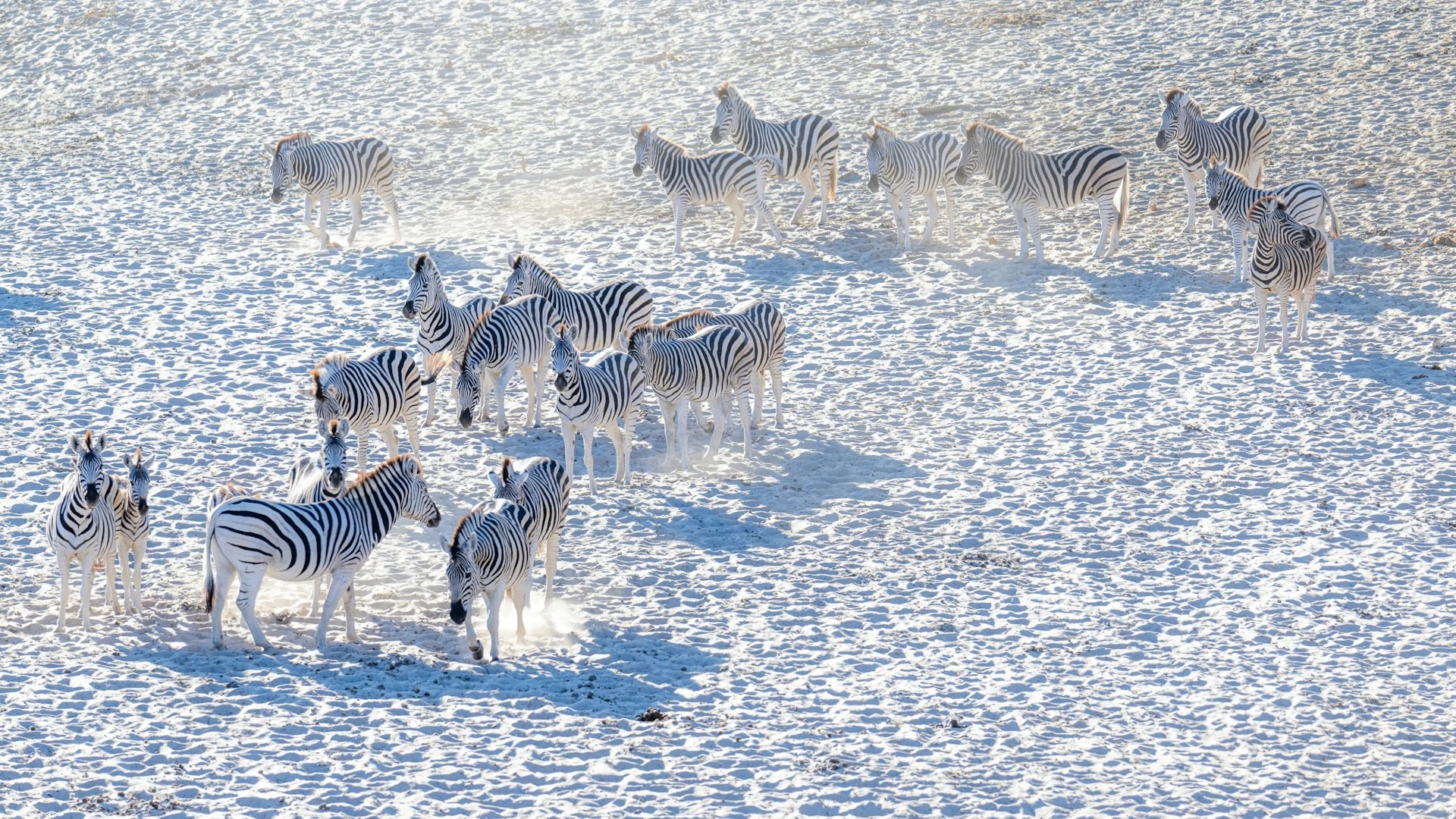
Seasonal salt pans and desert. Green season brings zebras and flamingos; dry season brings silence.
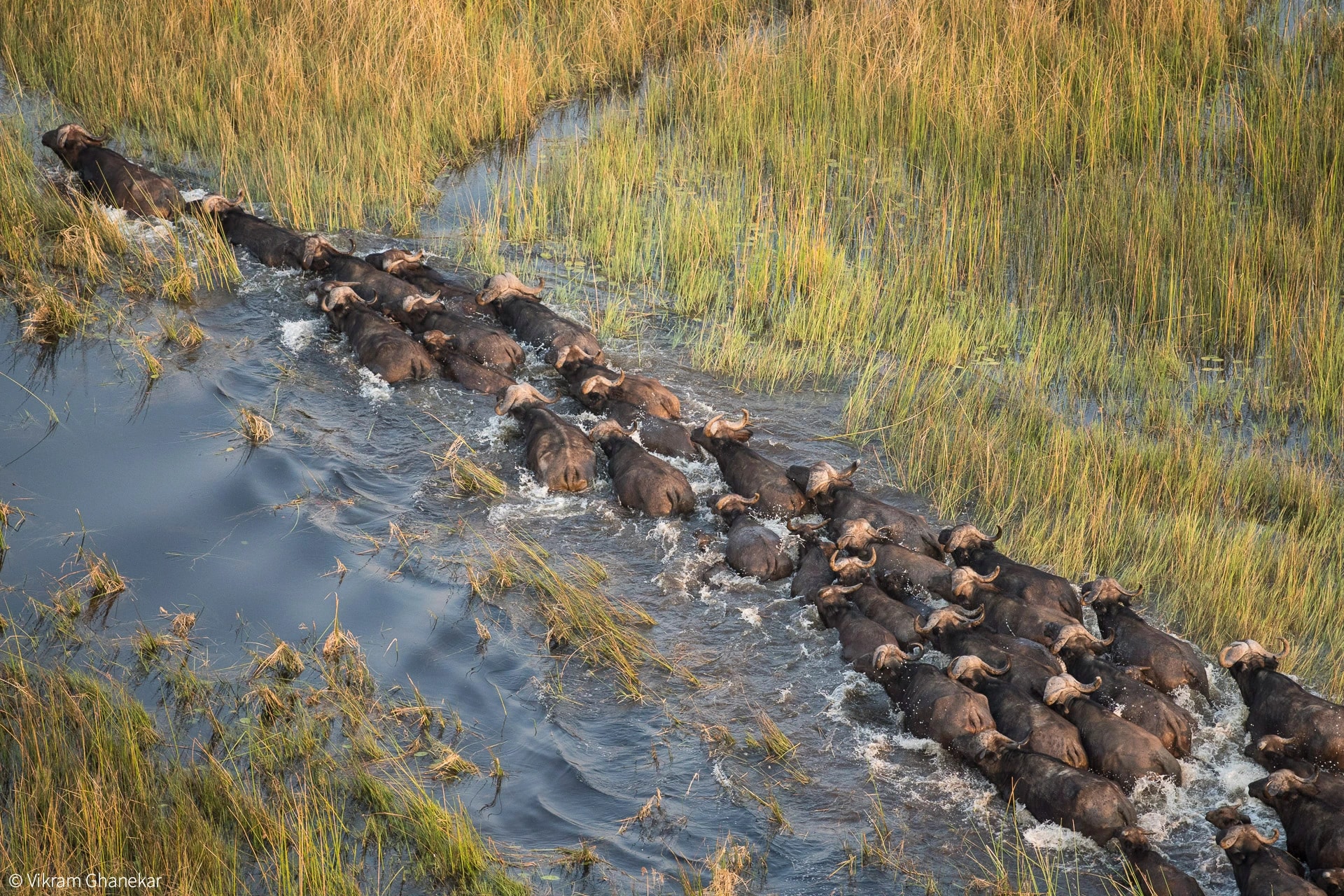
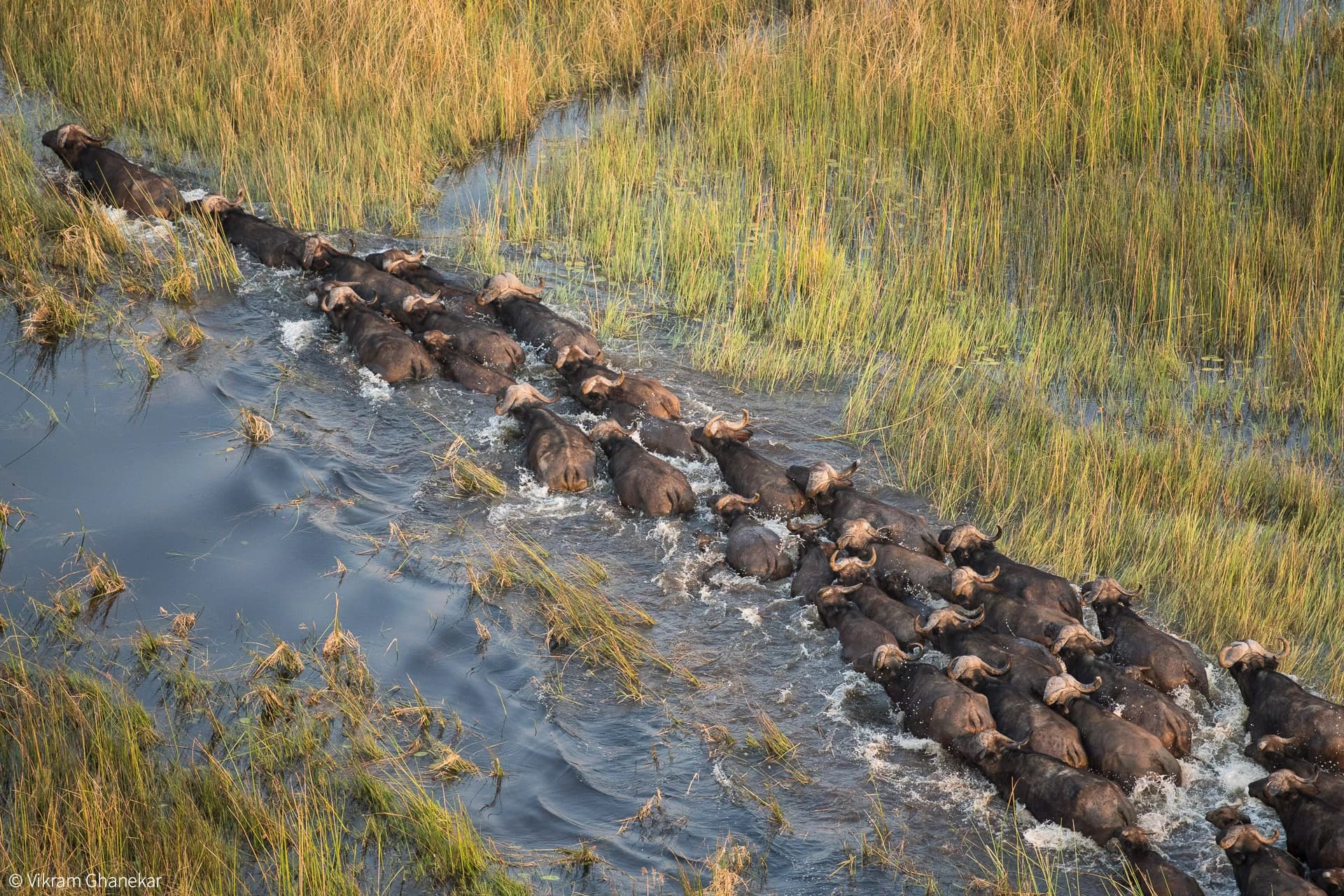
An inland river fan the size of Switzerland — mokoro glides, private concessions and water-based safaris.
Open Okavango Delta →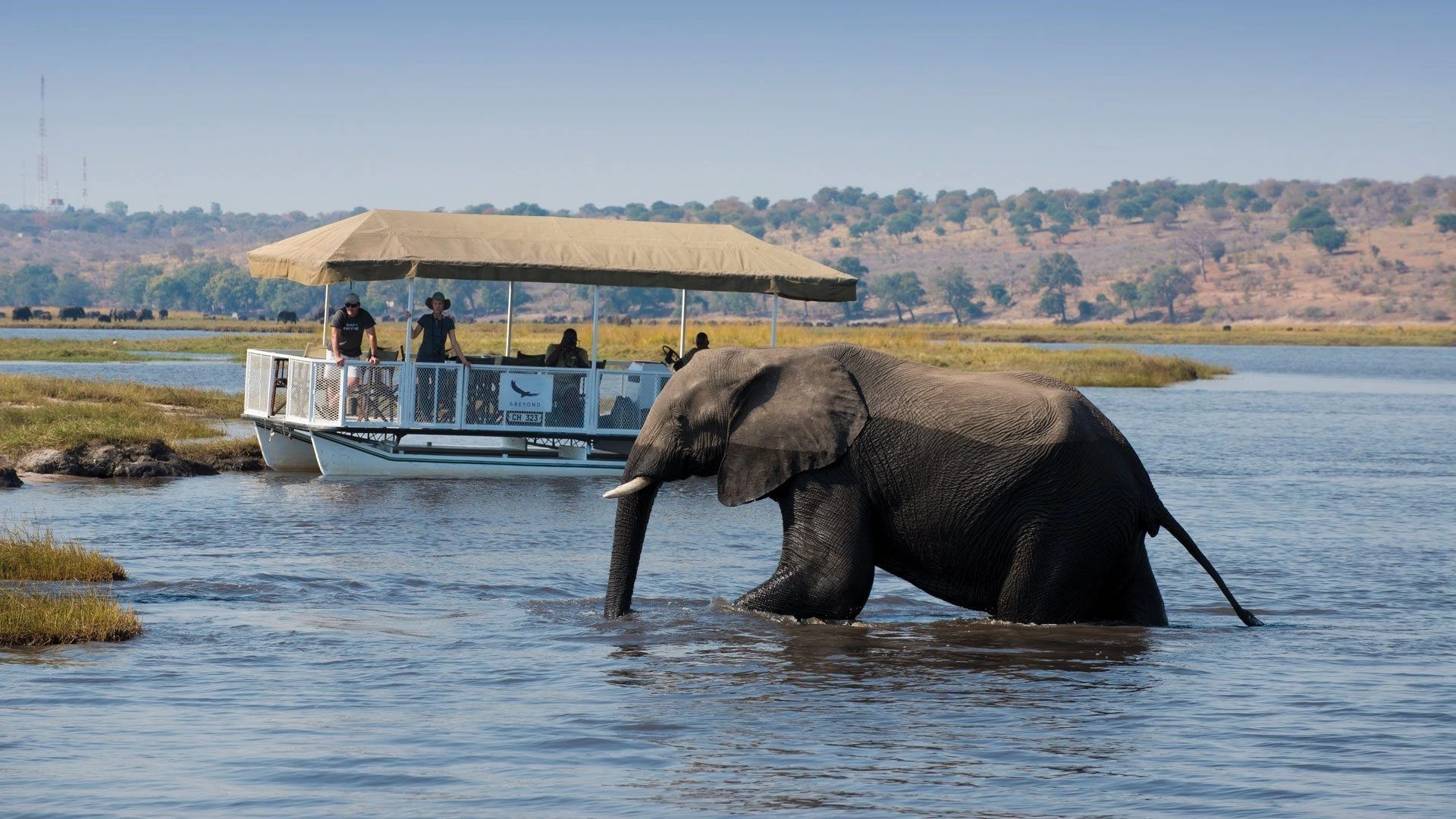
Home to Africa's densest elephant population, best seen from a boat on the Chobe River at sunset.
Open Chobe National Park →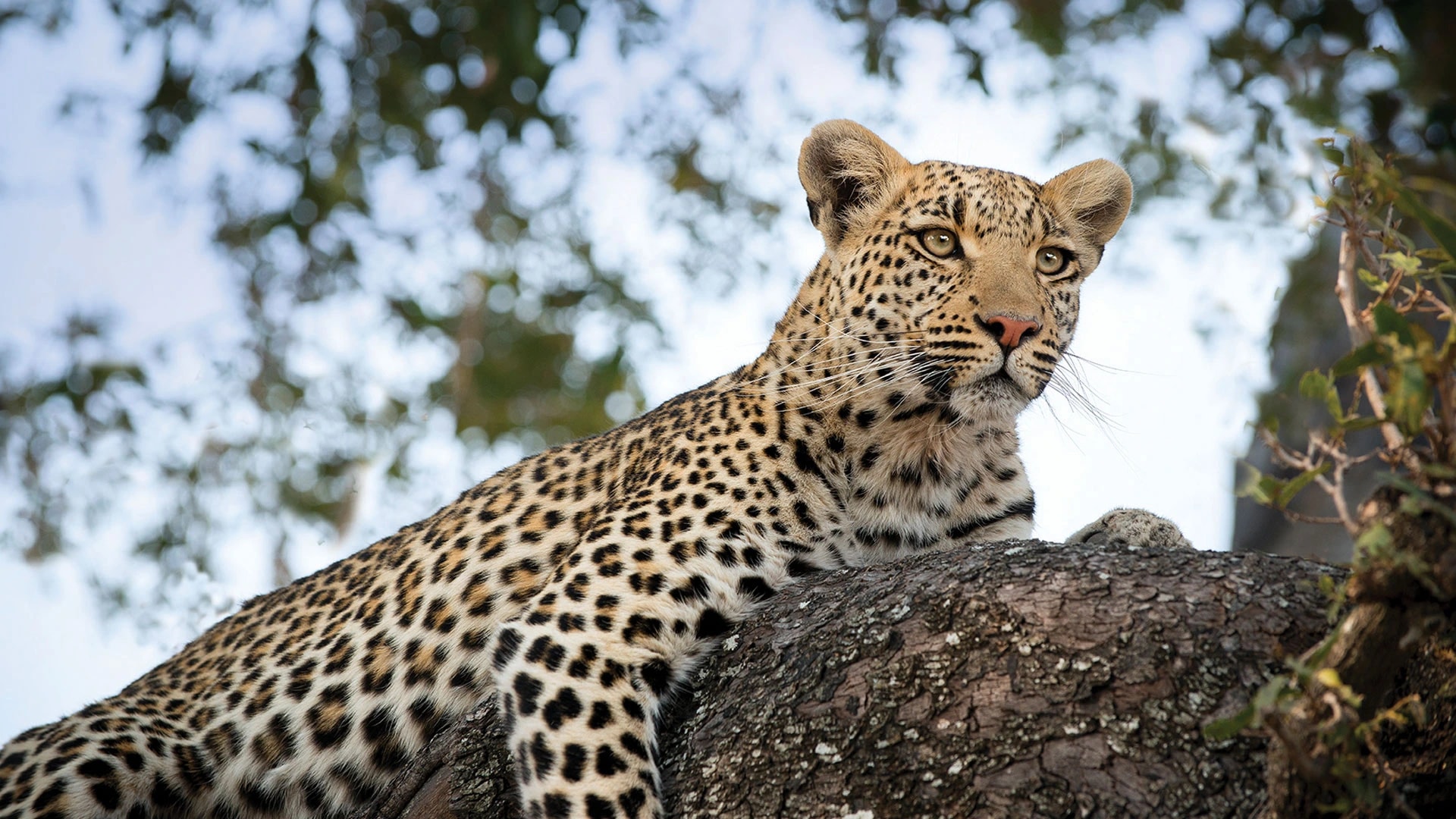
The eastern Delta — a mix of water channels and mopane woodland, with the continent's best leopard sightings.
Open Moremi Game Reserve →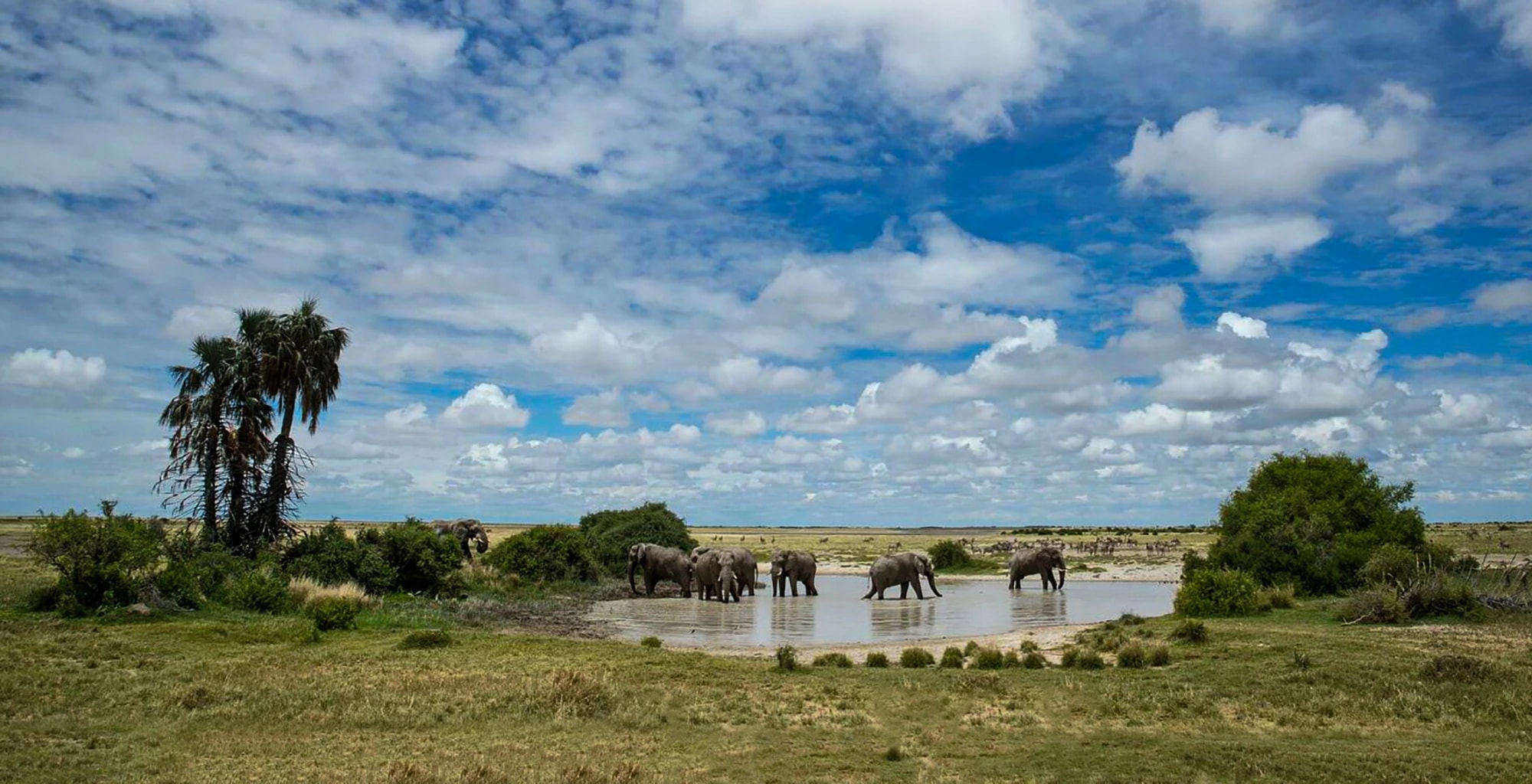
Salt flats the size of Portugal, with flamingo migrations, meerkat colonies and quad-bike expeditions.
Open Makgadikgadi Pans →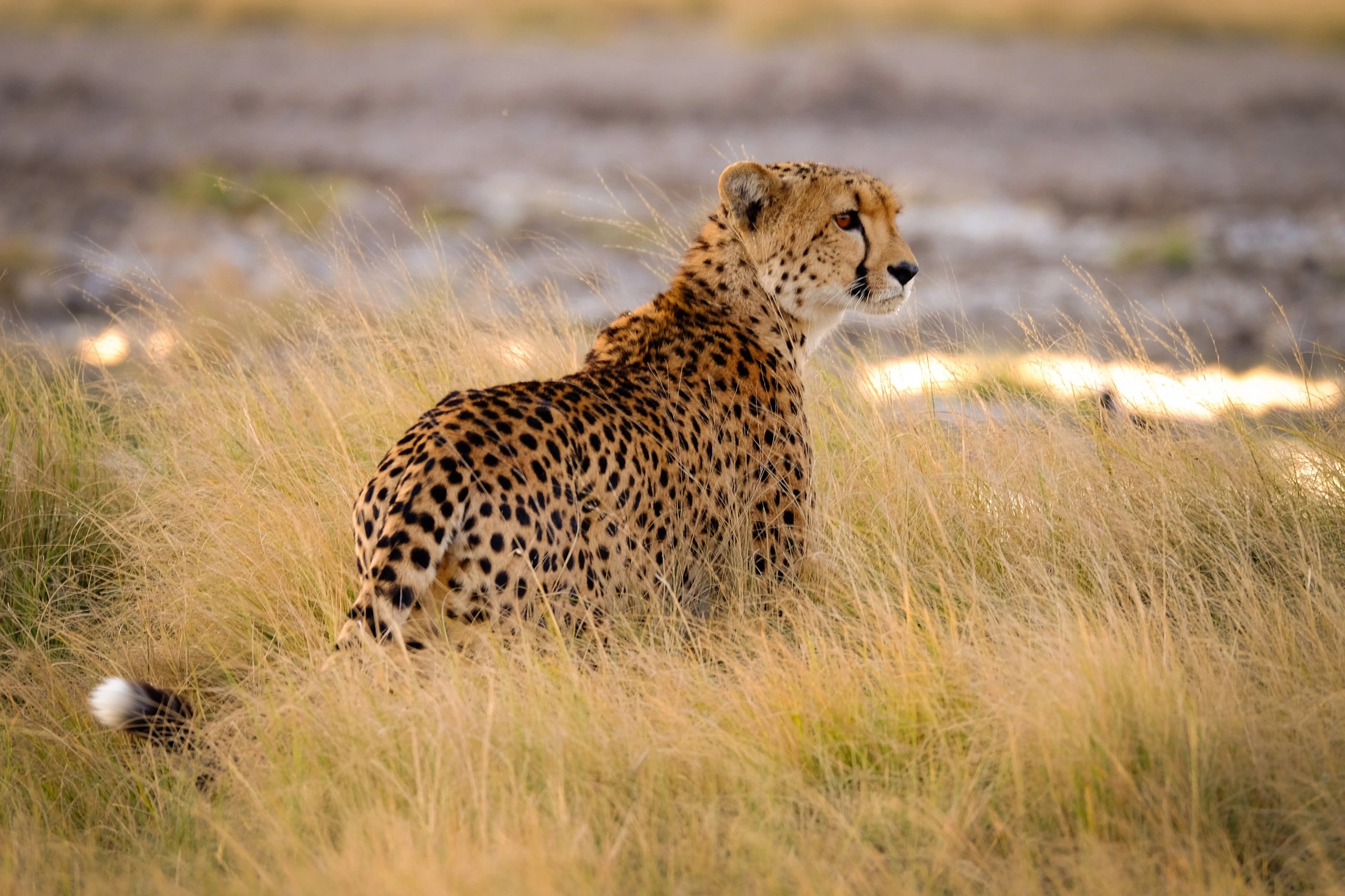
Remote, semi-arid, and genuinely wild — black-maned lions, aardvark sightings and Deception Valley grasslands.
Open Central Kalahari →May through October is dry season, which is when the Delta is flooded and wildlife concentrates on water. November through March is green season — lower prices, newborn animals, occasional rain.
Tell us the dates, travellers and what matters most — a senior safari expert will return a bespoke itinerary within 24 hours.
Low-volume high-value tourism is policy. Camps are small, and park entry, concessions and conservation levies are deliberately high. It keeps the wild feeling wild.
Almost always yes. Roads in the Delta are seasonal and slow, and scheduled light-aircraft transfers are part of the experience.
Morning game drive at dawn, back to camp for brunch, midday rest, then a mokoro trip or boat cruise followed by a sundowner game drive.
Yes, but check camp age minimums — many are 6+ or 12+. We book family-friendly camps with dedicated guides for children.